How to Choose the Right Industrial RO Machine for Your Factory’s Needs
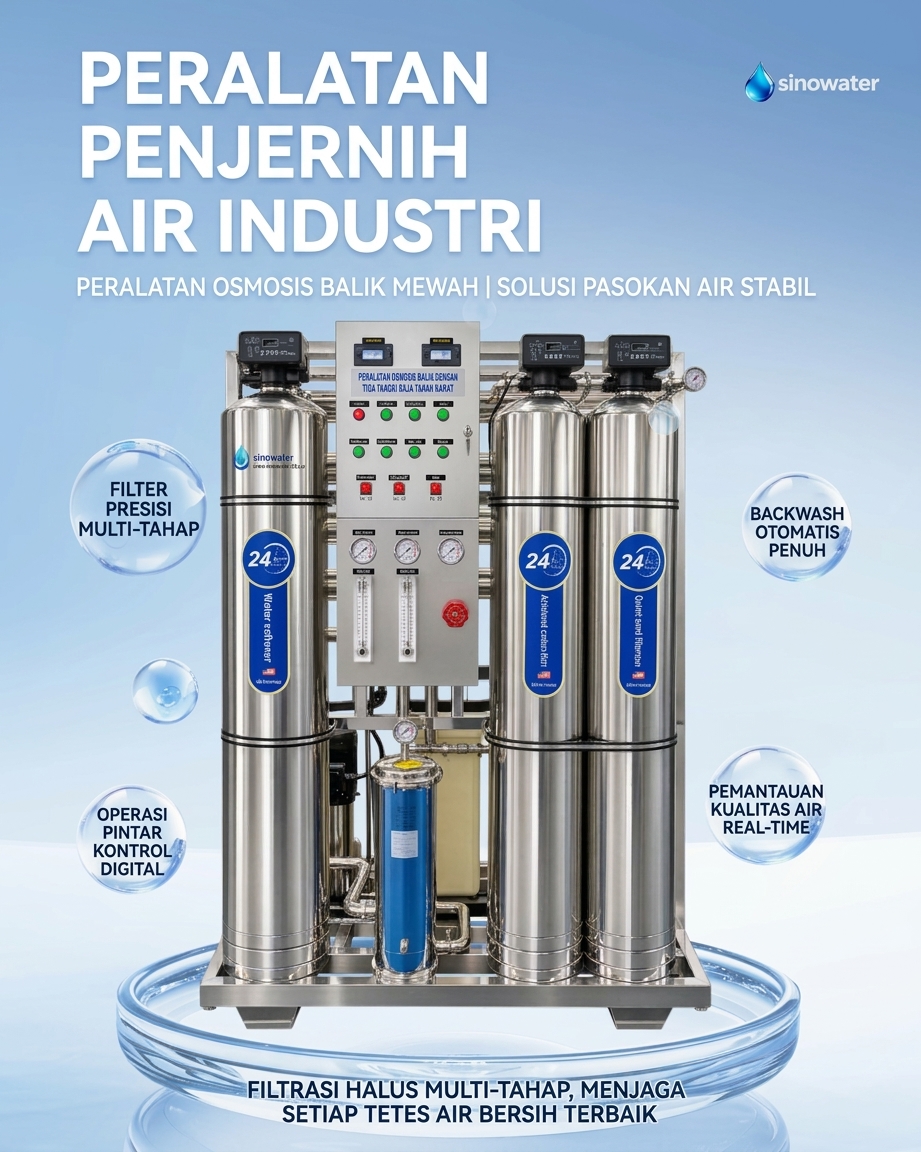
Clean water is one of the essential requirements in various industrial activities. Water quality can affect production processes, equipment cleanliness, operational efficiency, and the quality of the final products. Therefore, companies need to select a water treatment system that aligns with their operational needs.
One technology that can be used is an industrial reverse osmosis (RO) machine. This technology uses a semi-permeable membrane to help reduce dissolved salts and various substances in water, tailored to the characteristics of the raw water and the system design.
However, choosing an industrial RO machine should not be based solely on price or capacity. Companies must consider raw water quality, daily water demand, technical specifications, operating costs, and ease of maintenance.
Below is a guide to selecting an industrial RO machine so that the system chosen meets your factory’s requirements.
1. Understand Raw Water Quality Before Selecting an RO Machine
The first step is to determine the characteristics of the water to be treated. Water sources may include groundwater, surface water, piped water, brackish water, or seawater. Each source has different characteristics, requiring an appropriate treatment approach.
Some parameters that can be tested include:
- TDS (Total Dissolved Solids): indicates the amount of dissolved solids in the water.
- pH: reflects the acidity or alkalinity of the water.
- Hardness: helps identify mineral content that causes scaling.
- Turbidity: indicates the presence of suspended particles.
- Iron and manganese content: can affect water quality and system performance.
- Specific parameters: adjusted according to industrial process requirements and targeted output water standards.
The results of water testing help determine whether pre-treatment is needed before the water enters the RO membrane. This stage is crucial to reduce the risk of fouling, scaling, and decreased membrane performance.
2. Match Machine Capacity to Production Needs
Capacity is a critical factor when selecting an industrial RO machine. A system that is too small may struggle to meet water demands, while an oversized system could increase investment and operating costs without commensurate benefits.
Before determining capacity, calculate water requirements based on operational activities, such as:
- Water needed for production processes.
- Water for equipment cleaning.
- Water required for utilities and supporting processes.
- Factory operating hours.
- Safety margins for peak demand periods.
Companies should also distinguish between feed water capacity and product water capacity. In RO systems, not all incoming water becomes product water; some is discharged as concentrate.
Therefore, capacity selection should consider hourly or daily product water needs, recovery rate, and actual usage patterns.
3. Choose an RO Machine Based on Target Water Quality
Different industries may have varying water quality requirements. For example, water used for general cleaning does not necessarily require the same specifications as water used in specific manufacturing processes.
Before selecting a machine, define target water quality based on its intended use. Discuss the required parameters with your technical team or water treatment system provider.
Reverse osmosis technology can help reduce levels of various dissolved substances. However, the final outcome depends on raw water quality, system design, membrane condition, and operation. Some applications may require additional processes, such as advanced filtration, disinfection, or demineralization.
By defining water quality targets early on, companies can avoid selecting systems that do not match their process requirements.
4. Pay Attention to Pre-Treatment Systems and RO Membranes
RO machines are part of interconnected water treatment systems. Membrane performance is influenced by influent water conditions, operating pressure, temperature, and maintenance practices.
Pre-treatment systems may include sediment filters, multimedia filters, activated carbon, or other processes depending on raw water analysis results. Not all installations require the same configuration.
In addition, review the following aspects:
- Availability and specifications of replacement membranes.
- Regular membrane cleaning requirements.
- Pressure and water quality monitoring systems.
- Availability of measuring instruments and supporting components.
- Ease of accessing technical services and spare parts.
Selecting an appropriate system helps maintain stable water production and simplifies maintenance activities.
5. Calculate Investment and Operating Costs
The purchase price is not the only cost associated with an industrial RO machine. Companies must also account for expenses incurred during system operation.
Cost components to evaluate include:
- Machine and ancillary component prices.
- Installation and integration with existing facilities.
- Electrical consumption for pumps and other equipment.
- Replacement of filters and membranes.
- Chemicals for treatment or cleaning, if required.
- Routine inspections and maintenance fees.
- Management of concentrate or waste streams.
Compare costs based on equivalent product water requirements and comparable service lifespans. A system with a lower upfront price may not necessarily offer the most economical operating costs.
Request detailed specifications, energy consumption assumptions, consumable needs, and maintenance plans so that your company can assess total cost of ownership more comprehensively.
6. Ensure the System Matches Site Conditions
Before purchasing an industrial RO machine, verify the readiness of the installation site. Factors to consider include available space, electrical supply, feed water pressure and flow rate, maintenance access, and concentrate disposal routes.
If the machine will be integrated into an ongoing production process, coordinate installation requirements with operations and engineering teams. This helps minimize disruptions when the system goes live.
For specialized needs, companies can consider systems designed specifically for local water quality, capacity, and facility conditions.
7. Choose the Right Water Treatment System Provider
Beyond machine specifications, companies should assess the provider’s ability to assist with system selection, planning, installation, and maintenance.
Before making a decision, ask the following questions:
- Can the provider help evaluate water needs?
- Are machine specifications and capacities explained in detail?
- What kind of installation and maintenance support is offered?
- Are spare parts and replacement components readily available?
- How are warranties, after-sales service, and troubleshooting handled?
- Can the system be customized to fit the company’s operational conditions?
This information helps companies compare offers more objectively, rather than basing decisions solely on initial pricing.
Why Is Technical Consultation Important Before Buying an Industrial RO Machine?
Each facility has unique water requirements. Therefore, machine recommendations should be based on raw water quality data, required production capacity, target product water quality, and installation conditions.
PT Sinowater International Solution provides water treatment solutions for residential, commercial, and industrial needs. The company’s services include process planning, equipment customization, installation, and maintenance support tailored to project requirements.
For specialized applications, including seawater treatment using reverse osmosis technology, system specifications must be adapted to raw water conditions and desired product water quality.
Learn more about the company through the official website PT Sinowater International Solution. Prospective customers can contact the company’s team to discuss their specific water treatment system needs.
Conclusion
Choosing an industrial RO machine requires evaluating raw water quality, production capacity, target product water quality, pre-treatment systems, operating costs, site conditions, and technical support.
By considering all these factors, companies can select a system better aligned with their process needs and long-term operational plans.
Need a water treatment solution for industrial use? Contact PT Sinowater International Solution to discuss your water needs, system capacity, and technology options that suit your facility’s conditions.